3. Preparation of Detailed Project Report for Kalpasar Project
3.1 Need for Gap Analysis
The Kalpasar project feasibility has been studied over the past 40 years, considering various aspects, from the technical solution of the dyke to the environmental impacts. Kalpasar Department along with a number of national and international institutes and organization had carried out studies in various aspects of dyke design, socio-economic and environmental impacts and 36 studies were made available to NCCR for the preparation of DPR. It was evident that though data and knowledge have been developed in different levels of detail there was lack of clarity on the definition on the Project Design Brief, Design Limit States and Design Standards. Also, the studies have been carried out at different instances by different institutes at different time periods, there was lack of continuity between reports and design integration between reports was clearly missing to produce a single coherent design.
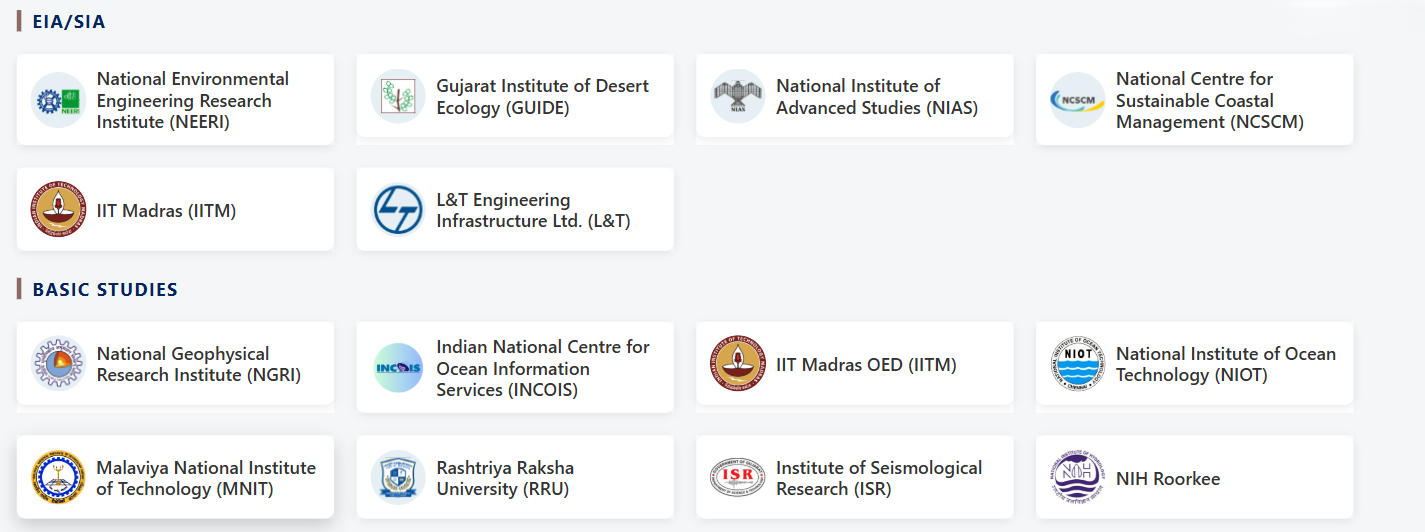
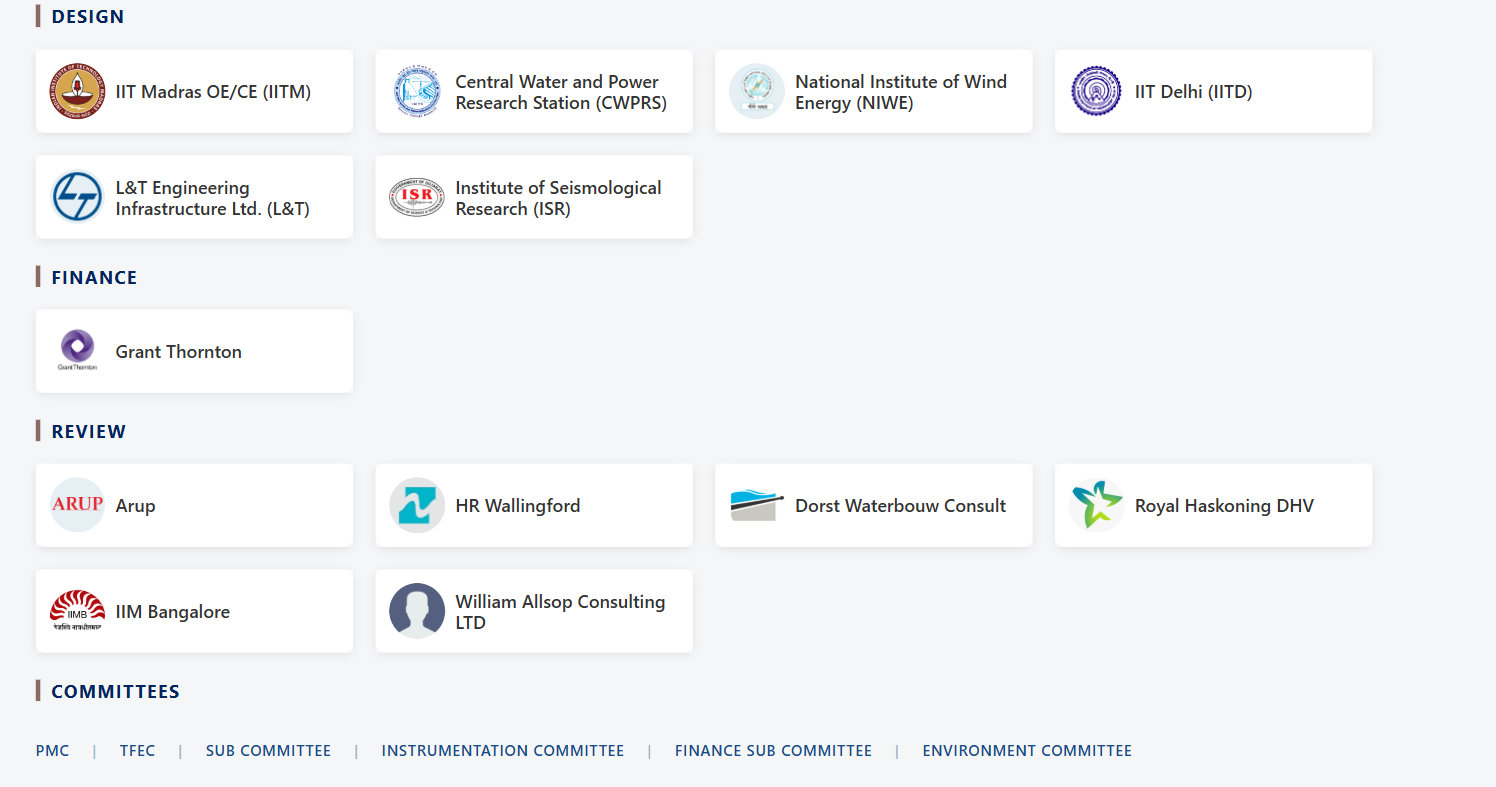
As a first step in the preparation of DPR, NCCR made a thorough analysis of all previous existing studies undertaken by the Kalpasar Department (GoG) and decided to undertake a detailed gap analysis to identify the technical and scientific gaps that need to be addressed for preparation of the DPR. The gap analysis clearly brought out certain critical gaps that need to be addressed for realization of project. Subsequently, Premier institutes of central and state governments were involved to carry out specific work elements related to Geotechnical Aspects, Flood Regulator Design, Design Basis Report, Dyke Closure & Hydromechanical Gate Design, Geophysical Engineering Studies, Ecological, Hydrological and Socio-Economic Impact Studies, Renewable Energy Studies, Social Impact Assessment, Rail, Road and Bridge Design, Traffic Assessment, Sea Level Rise, Inundation, Tsunami Impact Studies, Financial and Economic Viability Analysis, CRZ Maps etc.
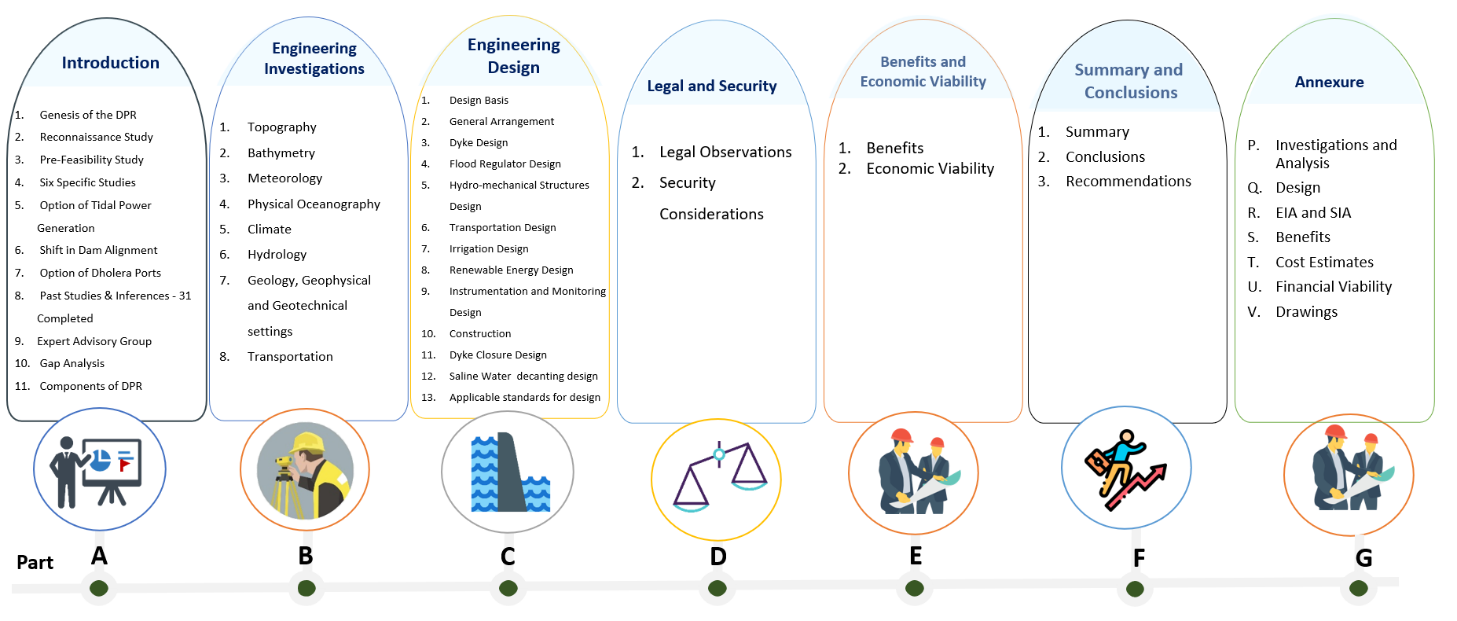
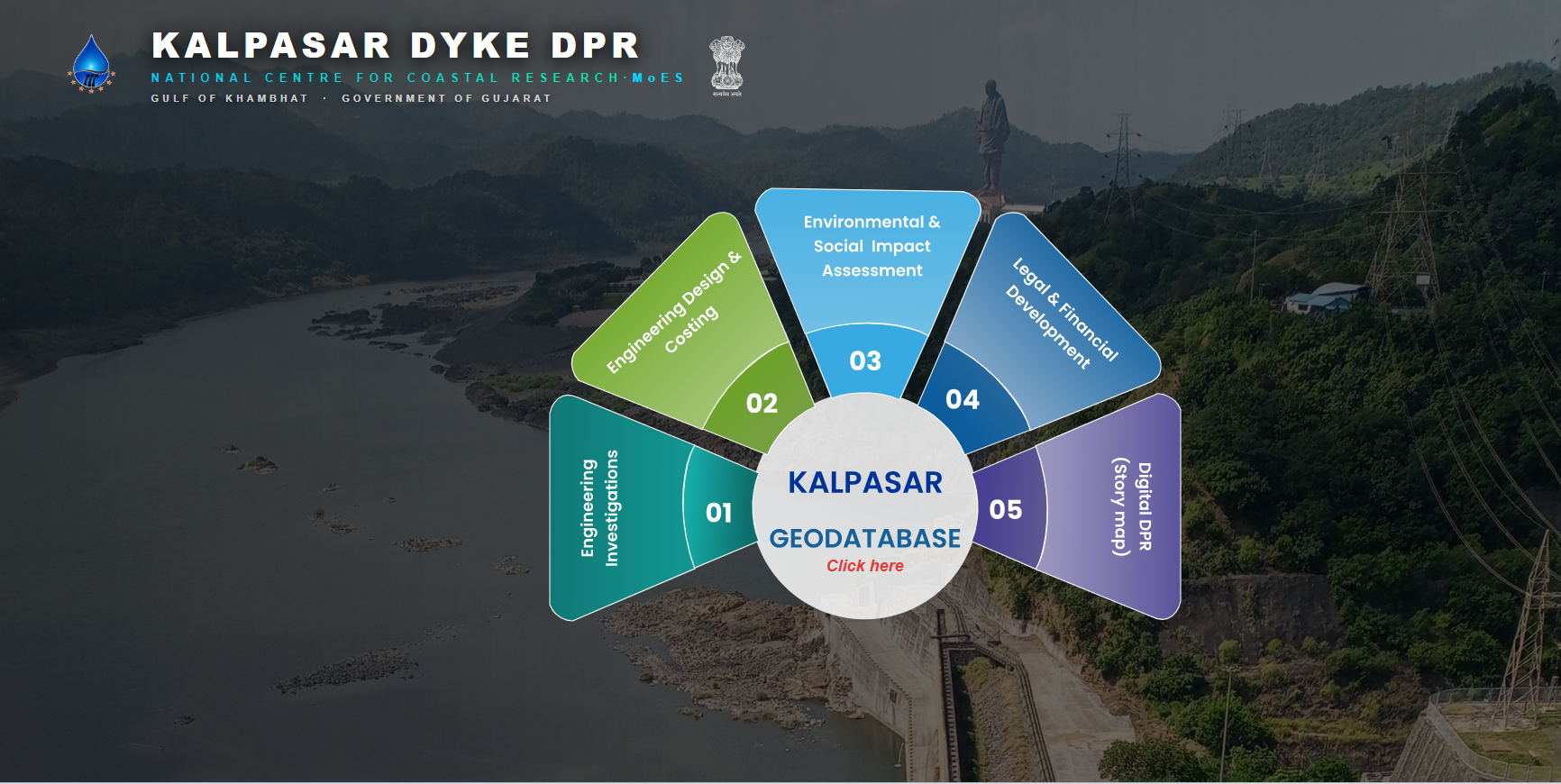
NCCR prepared the DPR for the Kalpasar Project under the following major sections namely Introduction, Engineering Investigations, Engineering Design, Feasibility, Summary and recommendations. It was felt that the development of the DPR should be monitored and regulated through a visual dashboard, for making prompt improvements. Dashboards have been used for such purposes as they serve as powerful tools for compiling pertinent data into a single view that provides a graphical picture of the current state of the project. The dashboard, a simple real-time user interface that displays a graphical representation of a project's current status (snapshot) and historical trends, provides improvement along Key Performance Indicators (KPI) to aid decision-making. For the Preparation of DPR for Kalpasar Project, a WebGIS Dashboard is designed to give decision makers all details and data relevant to various aspects of the project, progress of a project and underlying parameters all stored in a geo-database.